
 En
En


Abstract
Leading the construction of low-altitude visual arts and media integration new infrastructure, responding to the national low-altitude economy development strategy, and opening a new era of intelligent communication!
1. Policy Guidance and Ecological Co-construction: Low-altitude Media Integration Enters a New Stage of National Strategic Development
Against the backdrop of continuous technological revolution and industrial transformation, the low-altitude economy is accelerating from the exploration phase into a systematic development stage. With the continuous maturity of UAV technology, communication networks, and digital content production capabilities, low-altitude space is no longer just a scene for transportation and operations, but is gradually evolving into an important carrier for public communication and digital content. In this trend, “low-altitude media integration” is regarded as an important direction for nurturing new productive forces and expanding the boundaries of media communication, as well as a new form of deep integration between low-altitude economy and media.
This conference, held in Wenzhou, the “Poetic and Picturesque Egret City,” was especially significant as it took place in the year of the national “14th Five-Year Plan” framework. The conference was jointly hosted by Beihang University, the News and Publicity Center of the Ministry of Industry and Information Technology, and other units, bringing together government departments, research institutions, communication operators, technology companies, and mainstream media to precisely grasp the strategic intersection of low-altitude economy and media integration. The conference focused on the frontier topic of “low-altitude economy and media integration,” aiming to elevate the vast airspace from a physical space into a “sixth media” and a new platform for public opinion, integrating information transmission and service landing.
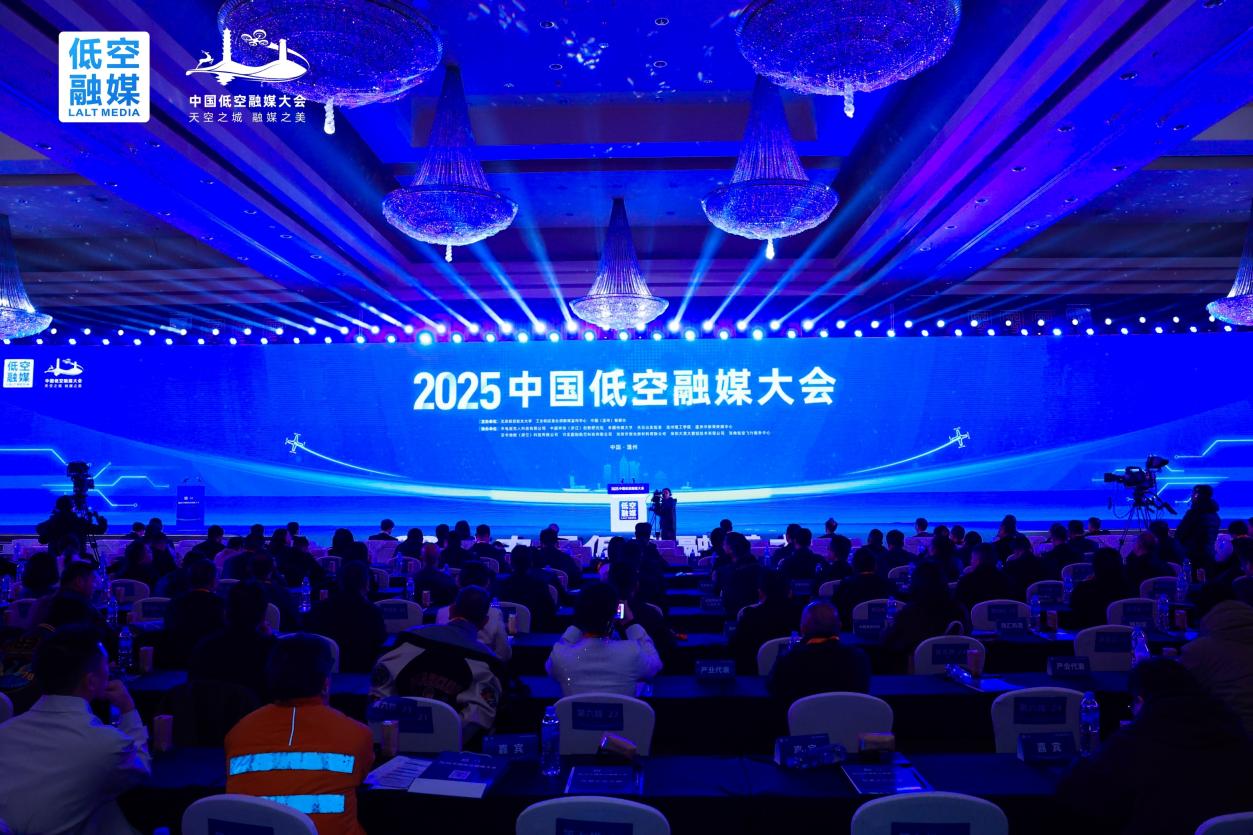
Deputy Director Lei Ying of the Second Equipment Industry Division of the Ministry of Industry and Information Technology stated in his speech: “The low-altitude equipment industry is the material foundation for developing the low-altitude economy and an important direction for cultivating new productive forces and new economic growth points.” As the first national conference with the theme of “low-altitude media integration,” its significance lies not only in its scale and specifications but also in its clear positioning—creating a collaborative demonstration platform for “government, industry, academia, research, application, and media” in the field of low-altitude media integration. The conference clearly conveyed that low-altitude media integration is not only a single technological application but a system project that requires policy guidance, standard support, and industry collaboration. On the one hand, low-altitude media integration has become an important application direction for the low-altitude economy. On the other hand, it has been assigned the important mission of promoting media integration innovation and expanding urban communication methods, marking a key step from technological exploration to industrialization and ecological development in the low-altitude economy.
2. Major Achievements Announced: Promoting the Grounding and Rooting of Low-altitude Media Integration with Standards and Consensus
Through the opening forum, thematic forums, achievements release, strategic agreements, and technical displays, the conference systematically presented the development background, application scenarios, and future directions of low-altitude media integration.
At the opening forum, a series of landmark achievements were announced, setting clear coordinates for the development of low-altitude media integration. The conference officially released the first batch of selected pilot projects for low-altitude media integration innovation applications, exploring replicable paths for low-altitude media integration in different cities and scenarios through pilot programs. At the same time, the work on the formulation of low-altitude media integration standards officially began, meaning that low-altitude media integration has entered the institutional construction phase from an advocacy stage. Through standardization, low-altitude media integration is expected to form a unified framework in aspects such as safety norms, technical interfaces, content production, and operational management, providing basic protection for the healthy development of the industry. In addition, the conference also released the Wenzhou Declaration on Low-altitude Media Integration, which expressed the industry consensus on promoting the standardized development, collaborative innovation, and safety of low-altitude media integration.
During the “Key Project Signing” session of the conference, the “DAMODA UAV Smart Chain Project” was successfully signed as one of the eight key projects. This project aims to deepen the intelligent networking, high-reliability communication, and collaborative control capabilities of UAV swarms, providing a safer, more efficient, and open technical foundation for low-altitude media integration. It is a concrete action by the company to respond to the conference’s call for “co-building new ecology” and promote key technological breakthroughs in the industry. As an important practitioner in the field of low-altitude media integration, DAMODA has long been involved in the practical exploration of low-altitude visual arts, low-altitude communication, and system security. The standards formulation, pilot project construction, and industry consensus promoted by the conference are highly aligned with the experience DAMODA has gained over years of large-scale practices and will establish a closer connection between the company’s technical capabilities and industry rules.
3. Industry Leaders Gather: DAMODA Leads Technology to Promote Deep Integration of Industry Practices
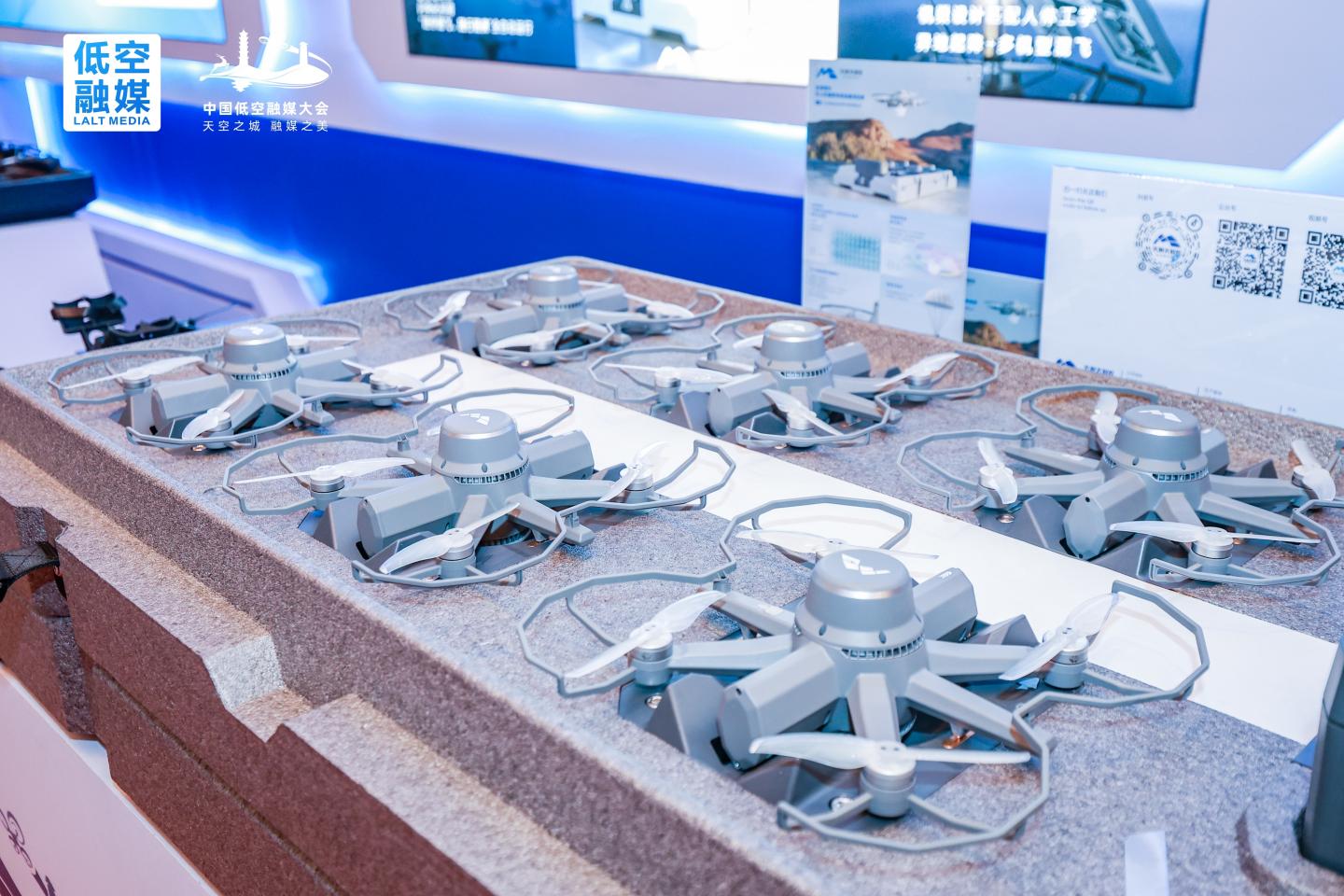
DAMODA relies on its complete independent research and development system and has built a full product line layout ranging from high-end to affordable, from fixed to mobile, and from hardware to software. This covers a product matrix and system solutions that meet multi-scenario needs, including core products such as the V-series, L-series, fireworks machines, and supporting software systems such as cluster control and flight control systems. DAMODA has also launched the “Fully Automated Cluster Smart Container and Intelligent Car-mounted UAV Performance System,” enhancing mobile infrastructure deployment capabilities and providing strong technical support and equipment guarantees for low-altitude media integration new infrastructure.
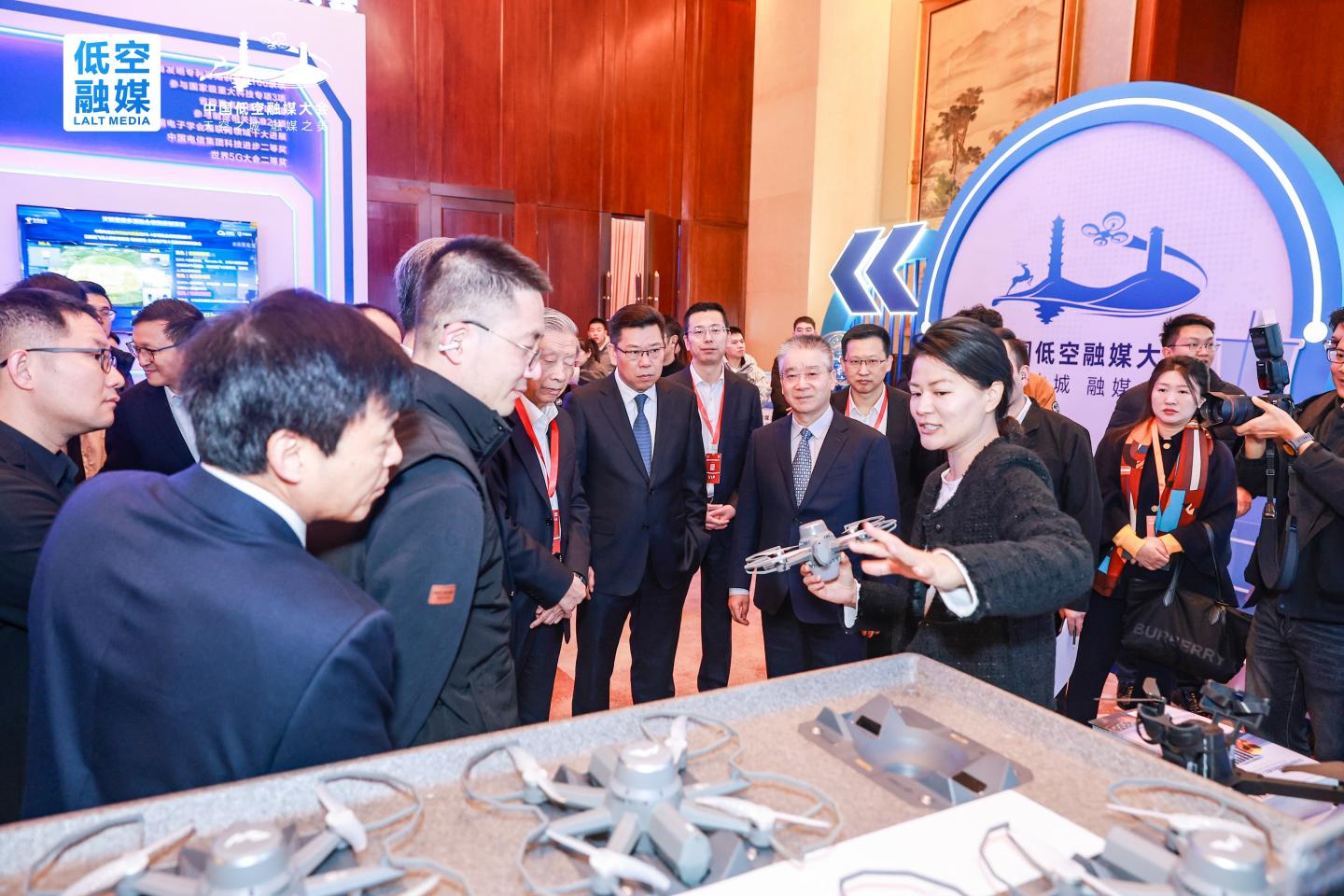
During the exhibition, DAMODA systematically showcased its core products, including the automated UAV swarm system V4 and L3, and conducted live flight demonstrations. Professionals, research institutions, and various partners in the low-altitude media integration field visited the exhibition and highly recognized the company’s technical achievements. In-depth discussions were held on the system’s technical details, specific application cases in low-altitude media integration, and future development directions.
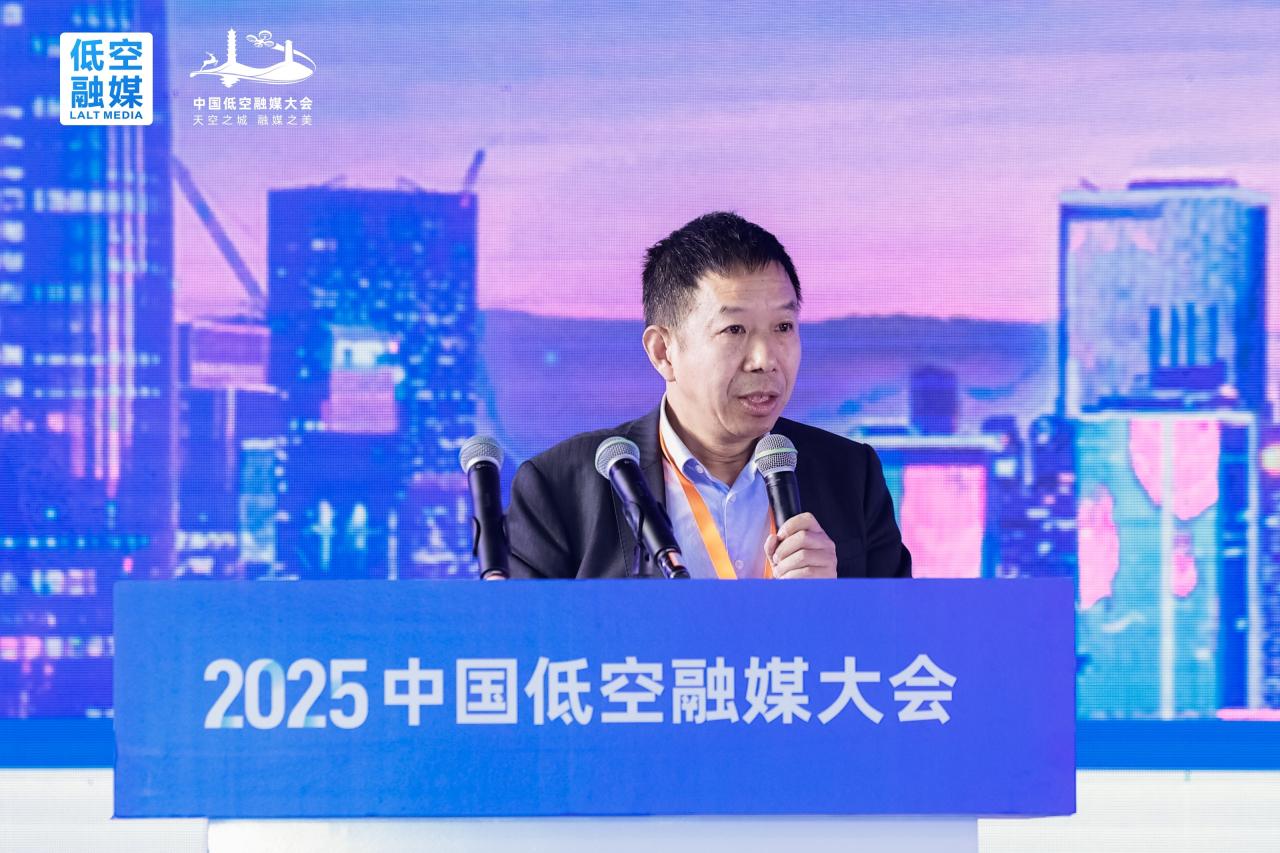
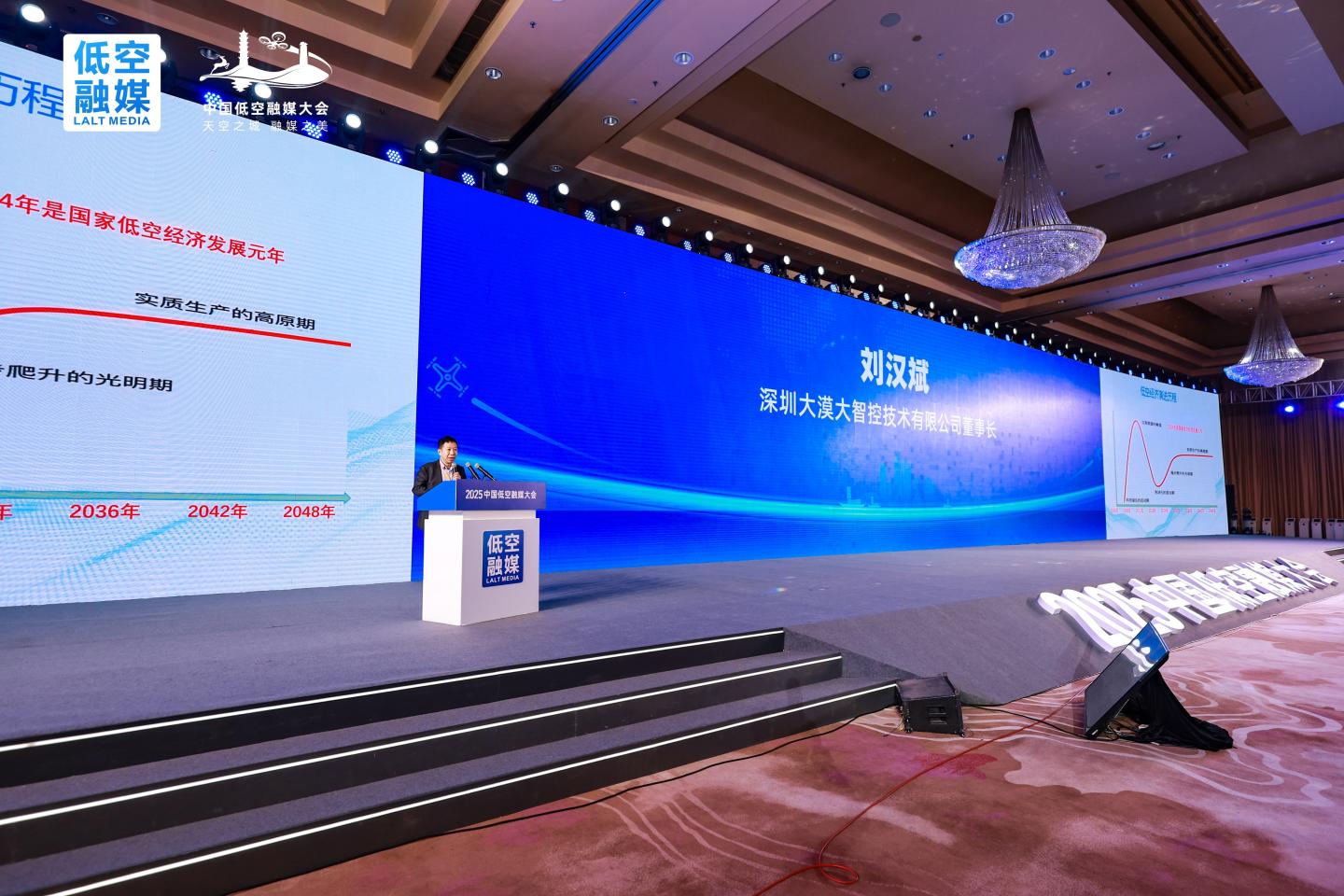
In the keynote speech session, DAMODA’s Chairman Liu Hanbin gave a speech on “Building Low-altitude Visual Arts and Low-altitude Media Integration New Infrastructure.” Starting from industrial frontline practices, he reviewed the development trajectory of the low-altitude economy, systematically explained the infrastructure attributes of low-altitude media integration, and conducted an in-depth explanation of the strategic significance of low-altitude economy and media integration, technological trends, and industry collaboration, outlining the development blueprint for low-altitude media integration.
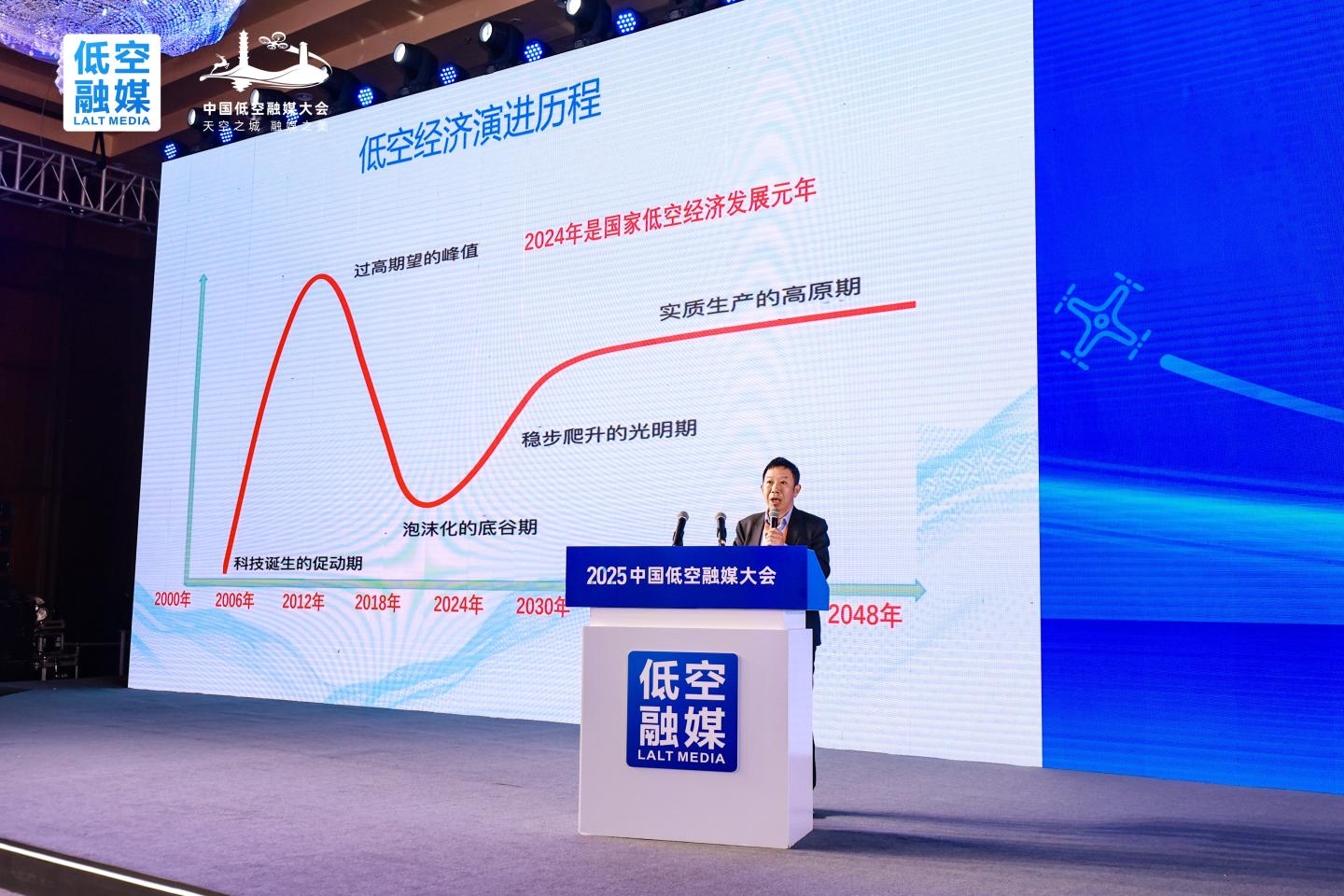
Chairman Liu emphasized, “We have always regarded the safe operating system and flight control system as the core of our technology.” He also pointed out that during the period of building and improving systematic facilities in the industry, UAV swarm performances are entering a new stage of “safe, automated, intelligent, and networked” collaborative development. As Liu said, “From the first generation of manual UAV performances in 2016 to the release of the industry’s first semi-automated UAV (V3) in May 2022, we made the industry’s ‘first’ breakthrough. The fully automated V4 system released in January this year has already turned it into a smart container.” DAMODA, through continuous technological R&D and large-scale application, is committed to making the UAV swarm system the core carrier of low-altitude digital performances and a new infrastructure for media integration.
Chairman Liu further stated that low-altitude visual arts are becoming an important medium for urban communication and public cultural expression. Its core value lies not in “scale spectacle” but in “sustainable operation.” This judgment provides a clear methodological support for low-altitude media integration’s transition from event-based displays to regular applications, also providing practical guidance for industry development. Furthermore, Liu pointed out that the UAV swarm light show system has three major application values: new entertainment, new media, and new lighting. DAMODA’s multi-site practice provides strong evidence for low-altitude media integration’s transition from technical demonstrations to city-level applications.
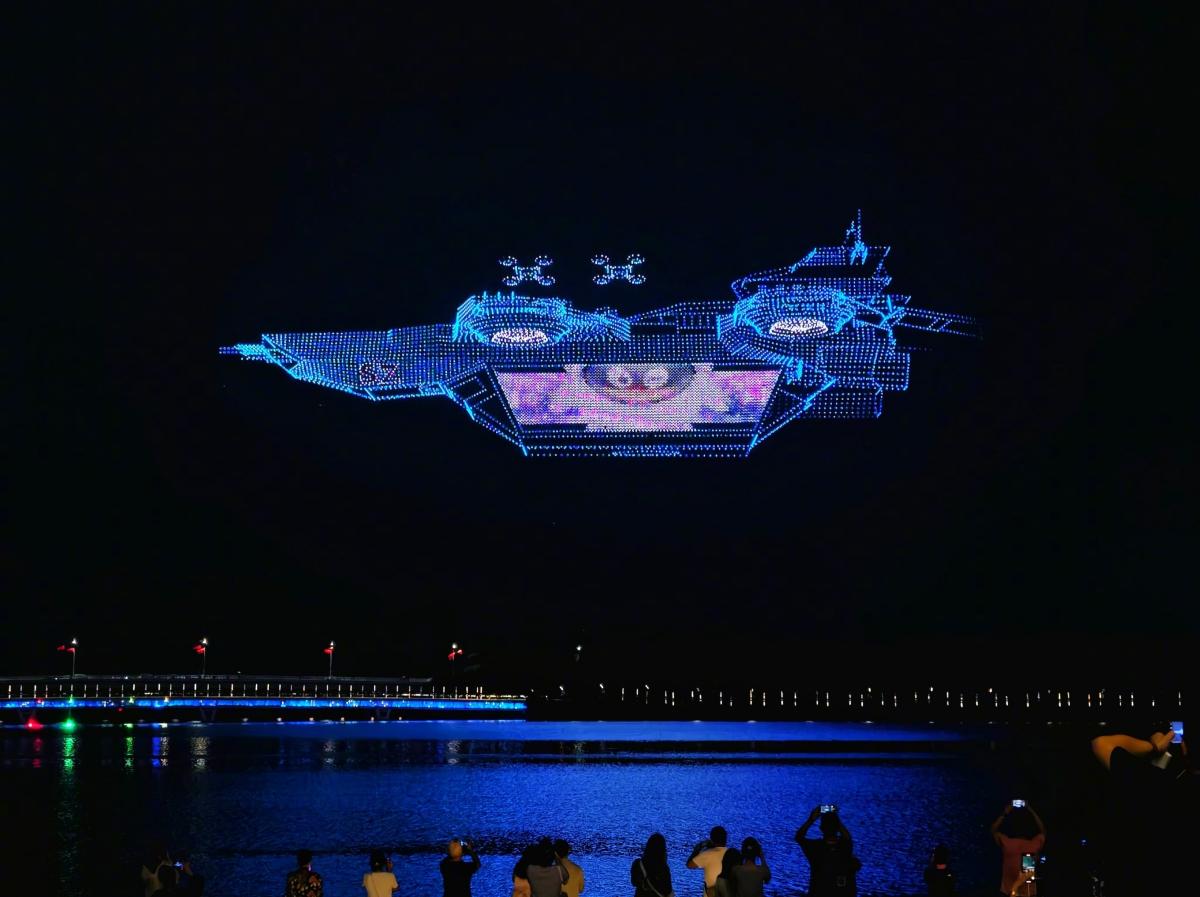
In Shenzhen, DAMODA completed a concentrated verification of low-altitude technology and system capabilities through extreme-scale practices. In September 2024, DAMODA controlled 10,197 UAVs simultaneously to take off over Shenzhen Bay, setting two Guinness World Records. Later, during National Day, 10,000 UAVs performed a “five-zone simultaneous flight” over seven consecutive days, attracting widespread attention from both domestic and international audiences. During this year’s Shenzhen 45th Anniversary celebration in August, 12,000 UAVs performed a dual-main venue linked show, creating an “aerial cyber cinema” to showcase Shenzhen’s legend. This innovative integration of “showing and consumption” resulted in a breakthrough of 1.2 billion yuan in cultural and tourism consumption on the day of the event, with a 30% increase in foot traffic and a 15% increase in foreign tourists.
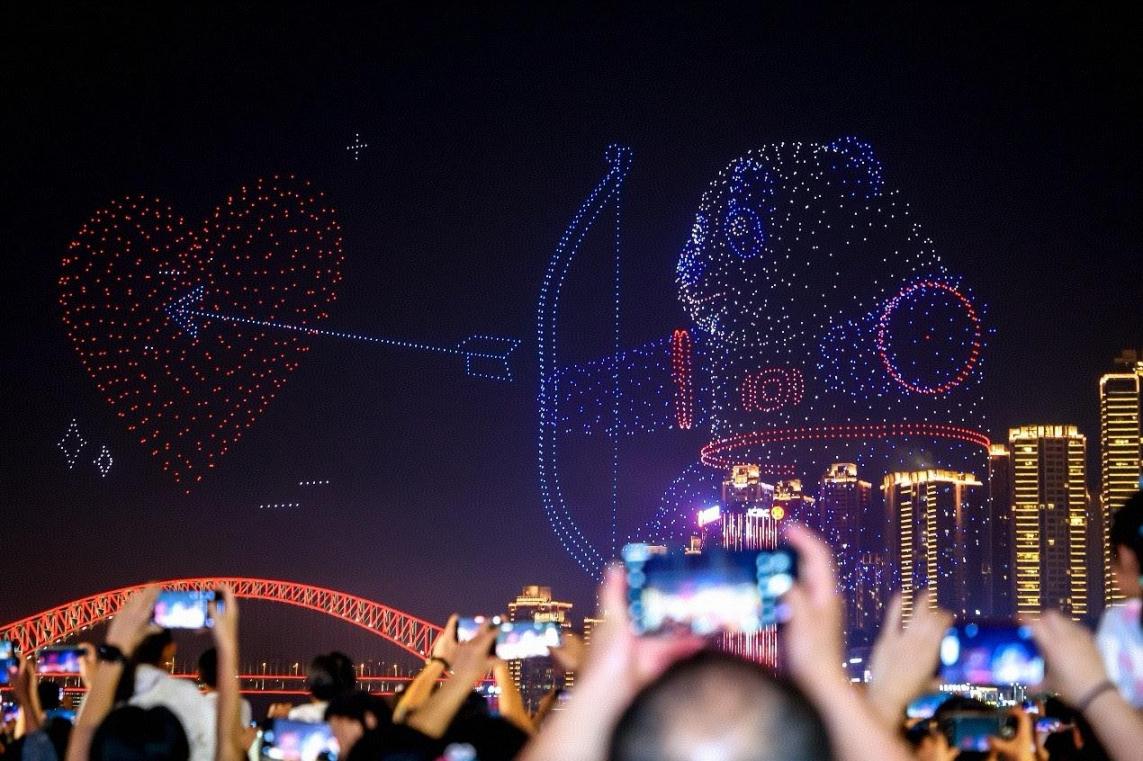
In Chongqing, DAMODA’s practice further shifted from technical verification to operational paradigms. In April 2025, the “Charming Chongqing” UAV performance project officially launched, forming the world’s largest regular UAV performance base. Through high-frequency performances, market-oriented cooperation mechanisms, and traffic-driven communication models, low-altitude visual arts were further integrated into the city’s public cultural service system, effectively driving cultural tourism consumption and enhancing urban communication influence.
To date, DAMODA has completed over 50 million UAV flights and more than 20,000 performances. The company’s business scope covers over 50 countries and regions globally, with over 100 cities, 500 billion views, and over 1,000 clients, including more than 200 internationally renowned brands.